

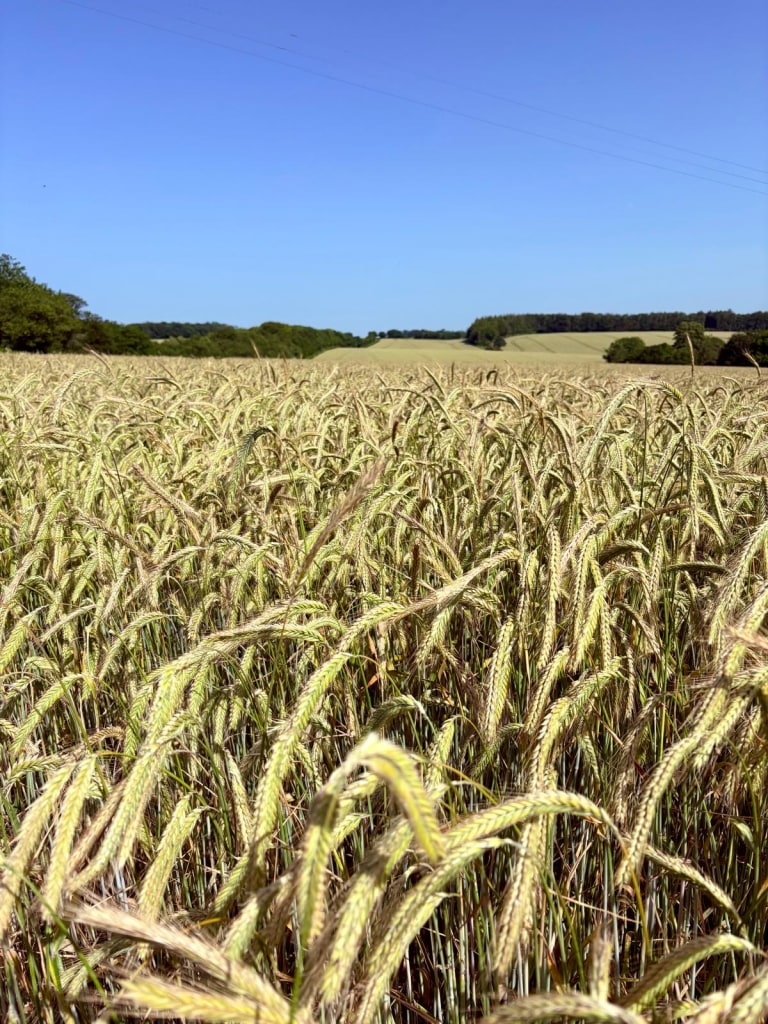
How break crops help improve food crops
In the first post in this series, we talked about what anaerobic digestion has done for our farm, our neighbours, and our community. This time, we’re getting into the detail of what actually happens in the ground.
We get asked a lot whether growing crops for energy takes land away from growing food. It’s a fair question. The short answer is no – done properly, it’s the opposite.
What is a break crop
Most arable farms don’t grow the same crop on the same field year after year. Wheat, for example, does better when it is not grown in the same ground repeatedly; pests and diseases that target wheat build up in the soil over time, and yields start to suffer.
The solution is crop rotation – growing something different in between, then coming back to wheat a season or two later. That ‘something different’ is called a break crop.
Where our feedstock fits in
We grow maize, rye, oats and grass for the AD plant, all of which work well as break crops. They are genuinely useful in rotation, and we pay a fair price for them, so they are a profitable crop for the farmers who grow them for us. They also do a job well beyond the field: once harvested, they are fed into the plant and produce green energy that displaces fossil fuels. In addition, any nutrients taken up by the break crops go into our digestate and can be re-used as a mulch / solid or liquid fertiliser.
Because they are not related to wheat, they do not carry the same pests and diseases. Also, rye is a very thick crop which is excellent at reducing black grass. So growing them in between wheat crops gives the ground a chance to recover.
Why soil health matters
Good soil is not just dirt. It is a living system, full of organic matter, nutrients, and microbial life that crop root systems depend on to thrive. Growing the same crop year in, year out wears that system down.
Healthier soil, with organic matter from digestate, holds water better, supports stronger root growth, and needs less intervention to keep crops thriving. It is the power beneath the throne, leading to better yields and disease resistance.
Energy crops and food production working together
Growing crops for energy doesn’t come at the expense of growing food; the two can sit alongside each other rather than having to compete. UK grain prices have stayed low over many years, reflecting a well-supplied global food market. That’s the picture on the ground: energy crops taking their place in the rotation, with food crops still strong. In Hampshire, we also have less mixed farming, so as well as providing a market to local farmers for our break crops, we can also offer them digestate to substitute for manures, which are less available locally these days.
The takeaway message
Growing crops for energy is not a trade-off against growing food. Used well in rotation, it is a tool that makes the food farming work better, and the soil underneath healthier, too.
The reality of our farm is that AD doesn’t compete with food production – it strengthens it. Not just better soil and better yields, but green energy and organic-approved fertiliser that both displace fossil fuel use.